

- Budget Speech 2025 (3 MB)
- Download Statements and Schedules (2 MB)
Table of Contents
- Introduction
- Focusing on the Financial and Economic Health of the Province
- Focus on Education
- Transforming Health
- Seniors’ Health and Well-Being
- Social Determinants of Health
- Justice and Public Safety
- Communities
- Labrador
- Business and Economic Development
- Infrastructure
- Conclusion
We stand at a defining moment in our history, united by our resilience, our ingenuity, our work ethic and our unwavering commitment to build a better future for Newfoundland and Labrador, and for Canada.
While tariffs and threats may hinder our trade with one country; it opens opportunities with others. As always, we rise when we address our challenges resolutely, with determination and tenacity. As Winston Churchill once said “Difficulties mastered are opportunities won.”
In the past five years, we have moved with energy and purpose to reimagine government, reimagine our economy, address the issues that impact us financially and move forward with strength, with vigor, with pride. Difficulties mastered.
Premier Furey called for a time of boldness and action in Newfoundland and Labrador and we have achieved incredible results.
- From leading the country in management and response to the pandemic
- To the Health Accord NL and critical health transformations
- To a targeted basic income
- To solving and saving Newfoundland and Labrador from the perils of Muskrat Falls
- To helping people with the cost of living, lowering taxes and putting over $750 million back in the people’s pockets
- To $10-a-day child care for over 11,000 children
- To increasing the child benefit for eligible families by 300 per cent
- To having 15 consecutive quarters of population growth
- To reimagining, reinvigorating and investing in education to improve outcomes and support the school community
- To strong labour relations and agreements made with every union – 30 out of 30 collective agreements achieved
- To an effective, funded housing plan
- To bringing our son, and brother, home by repatriating the remains of our unknown soldier
- To successfully negotiating and closing a painful chapter in Newfoundland and Labrador history by signing an MOU with Quebec, 17 years in advance of the termination of the original agreement ensuring $17 billion in new revenue, $227 billion in total revenue to the provincial treasury, new mega projects, and thousands of jobs over the life of the new agreement.
All this despite a global pandemic; hurricanes; fierce fires; impactful cyber attacks; and now tariff and sovereignty challenges. Our government has guided this province to record results.
This past year, Newfoundland and Labrador had the:
- Highest nominal Gross Domestic Product in the province’s history.
- Highest employment in our history.
- One of the lowest unemployment rates in our history.
- Highest household income in our history.
- Highest retail sales in our history.
We must continue to build on this considerable momentum.
Budget 2025 does just that making us Smarter. Stronger. Better. It delivers:
- A continued commitment to addressing affordability and the cost of living by continuing lowest gas tax in Canada; a 50 per cent reduction for vehicle registration; and a home heat rebate. Combined, these and other affordability measures add up to the $750 million already returned to people’s pockets.
- Investments in education to improve teaching services, classroom technology, as well as supporting Memorial University and College of the North Atlantic.
- Helping seniors by indexing the Seniors’ Benefit amount and income threshold.
- No increases and continued decreases in provincial taxation and fees for the fourth year.
- Record investments in infrastructure and economic growth.
Health care continues to take priority – over the last five years, its budget has increased by more than 40 per cent. Implementing recommendations from Health Accord NL and addressing the social determinants of health are essential to our well-being.
To ensure we can be responsive to the challenges to workers and business that tariffs may bring, we have $200 million in contingency available to nimbly and quickly respond as required to leverage and enhance Federal Government efforts.
We stand together, ready and united to build and improve Newfoundland and Labrador.
Focusing on the Financial and Economic Health of the Province
Thank you to the professionals within the Department of Finance who have worked diligently with me over the past six budgets on the financial and economic health of the province.
We are leading in economic growth among Canadian provinces. Our deficit has decreased from $1.5 billion in 2020-21 to $372 million estimated in 2025-26, which represents three per cent of revenues. Balanced budgets are projected for each year in our multi-year forecast starting in 2026-27. The return to balance is postponed by a year to ensure we focus on affordability and addressing tariffs.
Like all Canadian provinces, we borrow money by issuing bonds in the capital markets.
In 2025-26, we expect to borrow up to $4.1 billion, mainly for infrastructure which is an investment in our development, debt maturities, and increased liquidity. Strengthening the province’s liquidity is important, so that cash reserves are available to meet obligations.
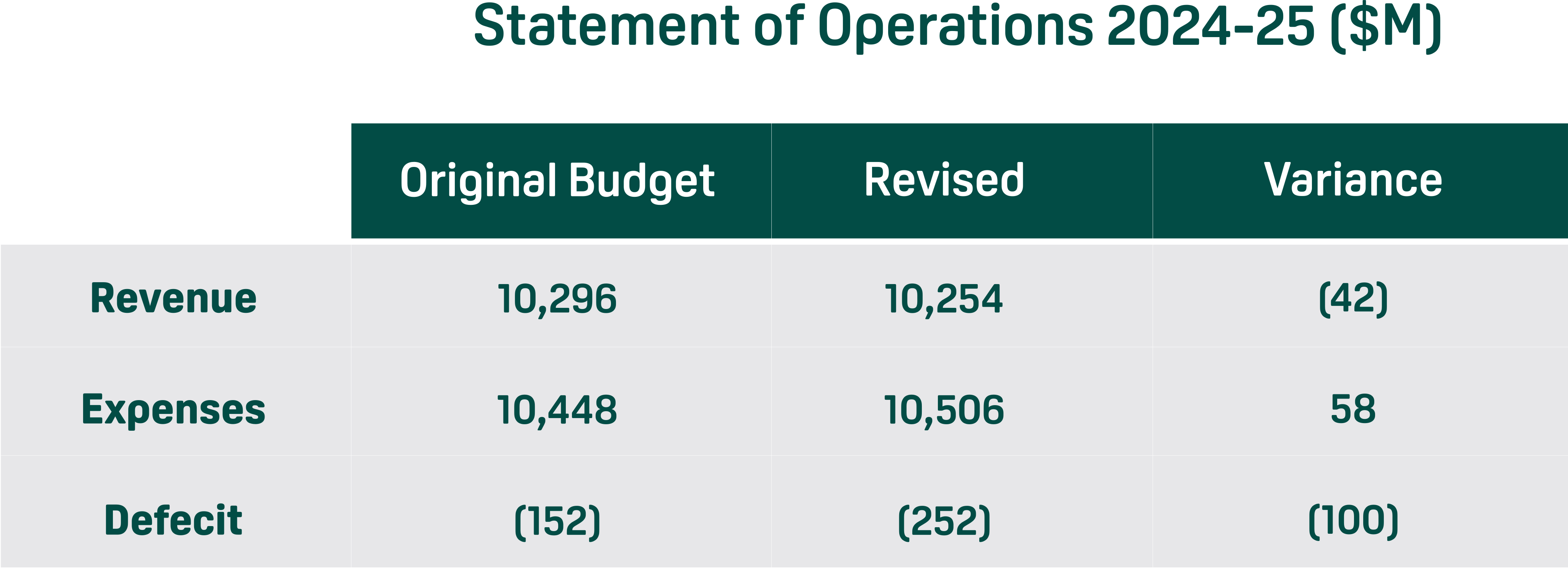
During 2024-25, we placed our first transactions in the European capital market, building upon the launch of the European borrowing program at the London Stock Exchange. The European borrowing program has diversified the province’s investor base, broadened the reach to international markets, and provided an opportunity to lower borrowing costs.
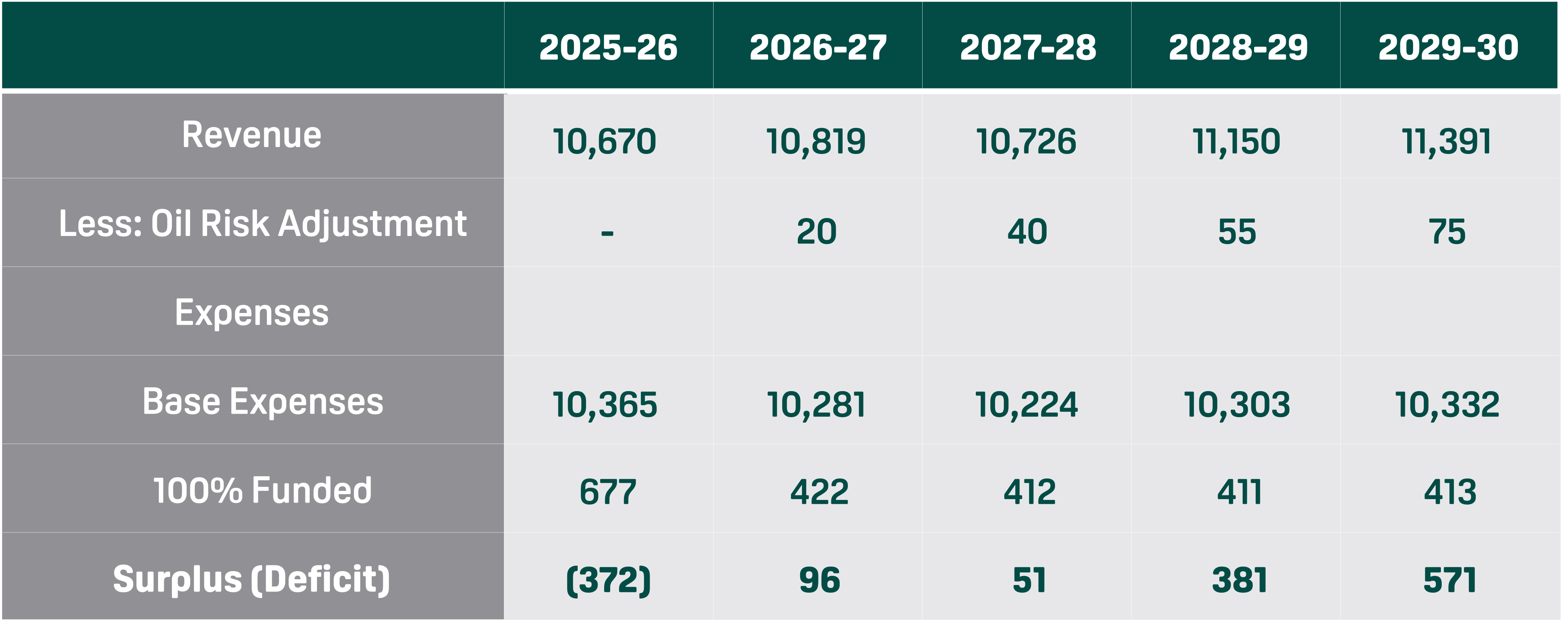
We have broadened the range of acceptable investments that the sinking fund and Future Fund may purchase so that we optimize investment performance.
We are pre-borrowing for debt maturities coming due a year in advance to ensure that the province maintains sufficient liquidity.
We are requiring all new debt issued to have an associated sinking fund attached so that the province is planning for the eventual retirement of its debt when it comes due rather than continually refinancing. For example, any long-term debt issued by the province (30 years to maturity) will be fully funded upon maturity.
The Future Fund further enhances liquidity as funds are put aside to repay legacy debt that does not have associated sinking funds. In 2025-26, we are contributing $108 million to the Newfoundland and Labrador Future Fund, bringing the total contributions to $467 million. Cumulative Future Fund contributions to 2029-30 are forecast to be $1.3 billion. As mentioned, this investment will be used for debt repayment, as well as future opportunities.
We continue to work diligently on behalf of Newfoundlanders and Labradorians to ensure we meet our financial objectives. In the future, this will include revenues from the historic Memorandum of Understanding with Québec signed in December 2024 to terminate and replace the 1969 Upper Churchill Contract, develop Gull Island and expand capacity of the Churchill Falls plant. This will result in $227 billion in total revenue to the provincial treasury over the life of the agreements.
Oil Projections
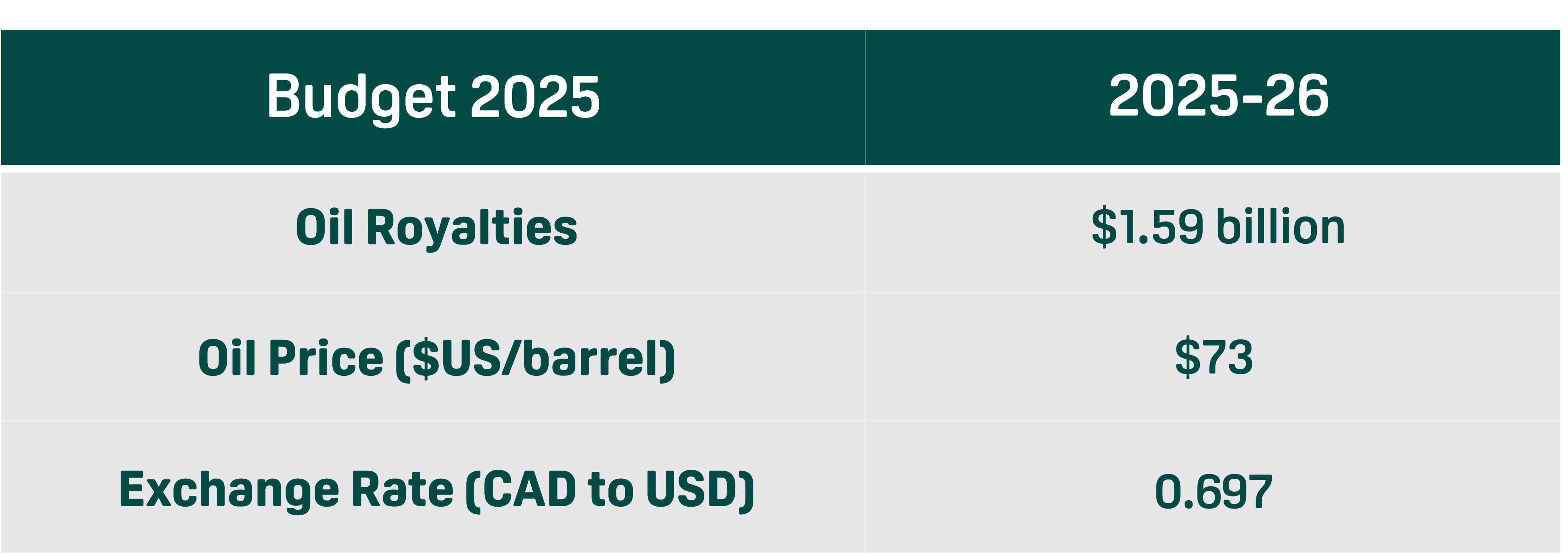
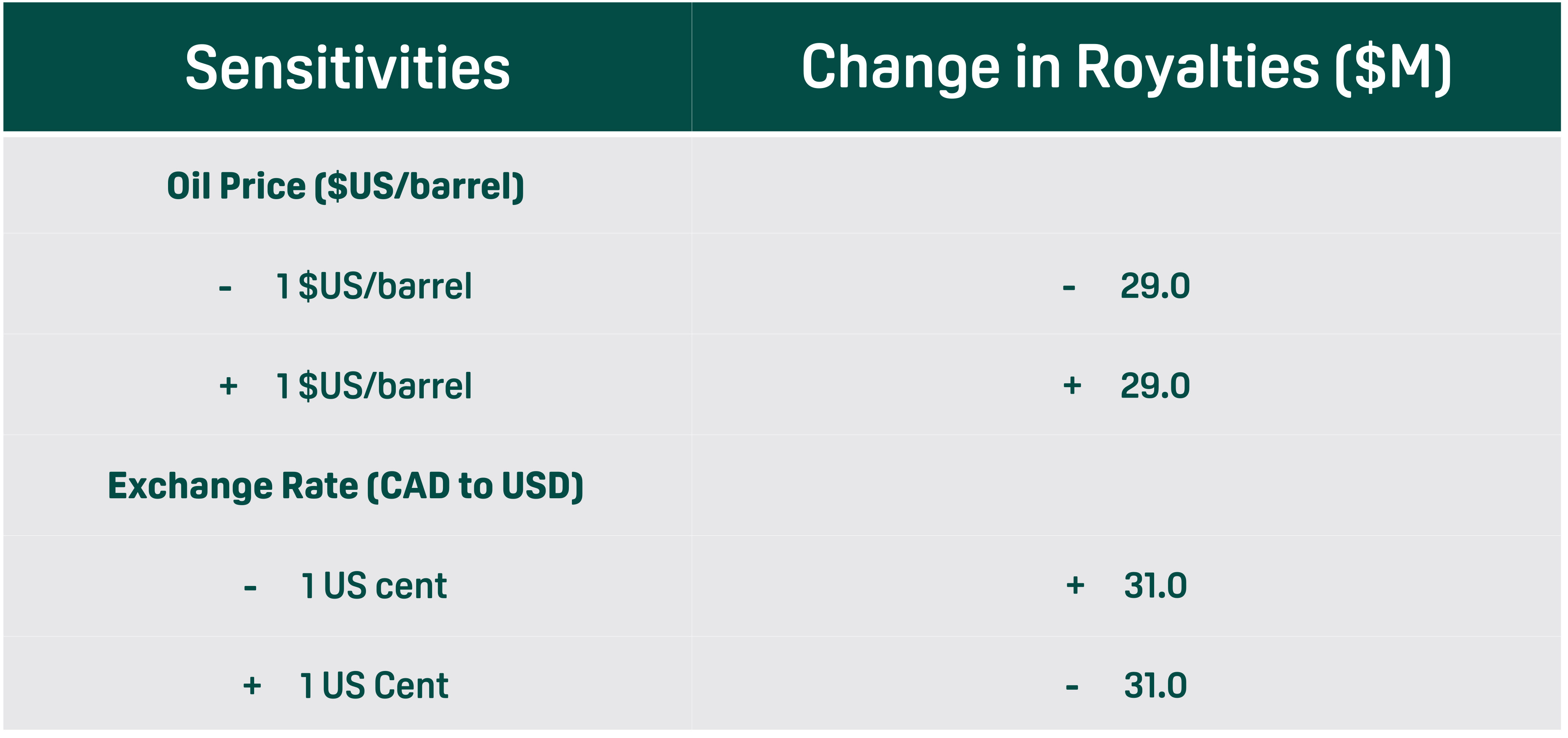
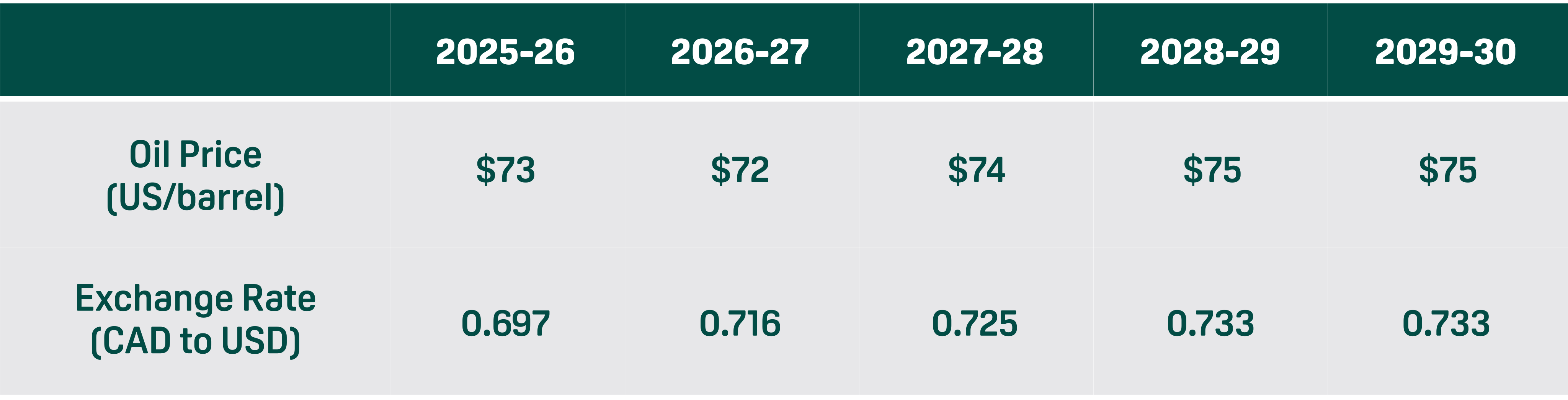
For 2025-26, oil is projected to be US$73 per barrel and the Canada to United States exchange rate is forecast to be 0.697 cents. These projections are informed by 11 Brent oil price forecasts and eight exchange rate forecasts.
Economic Outlook
Various tariffs have been placed on Canadian goods entering the United States and China. The impacts of these tariffs have been broadly captured in our economic forecast.
In 2025, Newfoundland and Labrador is expected to lead real GDP growth among all Canadian provinces with a forecasted increase of 4.4 per cent, primarily due to increased oil and mineral production.
Real exports are expected to increase by 6.4 per cent, driven mainly by higher crude oil, iron ore and gold production. The Terra Nova oil project is expected to continue to ramp up production and the Valentine Gold project is expected to start producing this year.
Capital investment is forecast to accelerate in the medium term, driven by construction activity associated with wind-hydrogen projects, the Bay du Nord deepwater oil project, and Upper Churchill-related construction activity.
Retail sales are forecast to increase by 2.0 per cent in 2025.
Population is forecast to rise by 0.2 per cent in 2025, with net natural losses being more than offset by international in-migration.
Total employment is forecast to decline by 1.2 per cent in 2025, primarily due to the effects of United States tariffs and Canadian counter tariffs on the local economy. The unemployment rate is expected to be 10.8 per cent.
The rate of consumer inflation is expected to increase to 2.5 per cent, mainly due to Canadian counter-tariffs on the United States driving up consumer prices.
Focus on Education
Education is the foundation of a prosperous and thriving future for Newfoundland and Labrador.
We are reinvigorating, reimagining and investing in our education system to improve educational outcomes, support a positive learning environment, and ensure effective education and training for the future. This will support all learners, educators, staff, and the school community to achieve success.
Leadership in Early Learning and Child Care
Early learning sets the stage for life-long learning and positions children for success.
This importance is why we have implemented significant measures to support the early learning sector. Our goal is clear – make child care accessible, inclusive, and affordable.
Firm in our commitment to advance early learning and child care, this year we are investing:
- $110 million to support the operating grant program and $10-day child care;
- $3.9 million for projects to increase the number of spaces; and,
- $1.7 million for bursaries and grants for students to become an early childhood educator.
Continuing the early childhood educator wage grid and ensuring that medical benefits are accessible to the early learning workforce is vital to supporting social and economic well-being in this province.
We have also taken progressive steps to support the child care needs of health care workers. In recognition of the unique scheduling requirements for many people working in health care, there are now multiple child care services with dedicated spaces for health care professionals. More of these dedicated spaces will become accessible this year, which will in turn help with recruitment and retention efforts.
Investing in K-12 Education
This year, we are increasing the teaching services by $20 million, rising to $44 million next year. This will result in the addition of more than 400 educators and learning assistants.
To ensure students have access to healthy food during school, we are continuing our commitment to expand school food programming to all Pre-Kindergarten and K-9 schools.
Appreciating the importance of learning and respecting Indigenous cultures and history, we have allocated $250,000 to enhance Indigenous education resources in the K-12 system.
Embracing Technology in Education
As we navigate an increasingly digital world, it is essential that students have appropriate technology in the classroom. From interactive whiteboards to digital learning platforms, we are transforming our classrooms into dynamic, tech-savvy environments that foster creativity and innovation.
To facilitate this initiative, an additional $5 million is allocated for technology devices and related infrastructure in schools. This will increase to $10 million annually next year.
Post-Secondary Education
Our annual investment in Memorial University represents more than 70 per cent of the university’s operating budget – this is one of the largest provincial investments in a public university in Canada.
As an autonomous organization, Memorial University is responsible for its operational decisions, including salaries, infrastructure, tuition, and academic programs.
This year, more than $400 million will be invested in Memorial University. This investment includes:
- $312 million for its core operating grant, as well as the Doctor of Psychology Program and the Faculty of Nursing’s satellite sites; and,
- More than $78 million for the Faculty of Medicine, which includes its annual grant, as well as close to $7 million for more medical school seats, clerkships, and expansion of internal medicine.
We are all aware of Memorial’s challenge to improve its infrastructure.
To help alleviate pressures, we are providing:
- A $13.68 million offset to support Memorial University’s budget;
- $70 million over the next eight years to help with deferred maintenance of university infrastructure; and,
- $7.8 million to offset the students’ Campus Renewal Fee. This will save a full-time undergraduate student $500 a year.
Budget 2025 includes $82 million for College of the North Atlantic’s operating grant. This reflects an $11 million increase and underscores the value of the institution in training the workforce that bolsters our economy.
We are also investing more than $3 million for an electric boiler at the college’s Prince Philip Drive Campus.
Beginning in the 2026-27 academic year, we are doubling the number of subsidized seats for Newfoundland and Labrador students at the Atlantic Veterinary College.
Supported by a $33.5 million investment, we are maintaining one of Canada’s strongest student aid programs and most accessible post-secondary education systems. With this investment, upon graduation, eligible students can have 100 per cent of their provincial loans forgiven under the Newfoundland and Labrador Debt Reduction Grant Program.
Libraries
This year, the Provincial Information and Library Resources Board will receive $13.5 million to continue its important work. This is a $500,000 increase in the budget, and marks the second year in a row that we have increased the investment in libraries.
Workforce Development
Skills development means better jobs, higher wages, and a brighter future.
Our annual investment of nearly $160 million empowers individuals to embrace in-demand careers. We offer some of Canada’s most generous benefits, including tuition, books, living costs, and child care.
This year, we are reducing financial barriers to obtain journeyperson certification by eliminating fees for apprentices and trade qualifiers.
In 2024, we launched Working Opportunities. This program breaks down barriers to education and has already helped dozens of individuals, including single mothers and young adults, pursue careers in fields like nursing, automotive service, and carpentry.
Our Youth Summer Apprenticeship Program, in partnership with Skills Canada, provides high school students with a taste of these exciting careers.
Participants “learn while they earn,” gaining valuable apprenticeship hours toward certification. Employers benefit from a 75 per cent wage subsidy, making it easier to invest in the next generation of skilled tradespeople. The program’s growth is remarkable, from 12 participants in 2023 up to 80 in 2025.
We’re empowering students with in-demand skills for a fulfilling future.
Transforming Health
Supported by the work of Health Accord NL, and record high investments that have increased the health care budget by more than 40 per cent since 2020, positive results are being achieved.
- Over 2,500 orthopedics surgeries were completed in 2024 – a 12 per cent increase from 2023;
- Non-urgent wait times for MRI has decreased by 13 per cent in the Eastern-Urban Zone of NL Health Services;
- The use of agency nurse has decreased by 42 per cent from its highest point;
- 124,000 accounts have been created on MyHealthNL;
- More than 200 patients have benefited from the innovative fly-in/fly-out program for cardiac catheterization, allowing them to return home the same day freeing up hospital beds; and,
- Travelling orthopaedic teams have performed close to 500 joint replacement surgeries, drastically improving patient outcomes and quality of life.
These improvements would not have been possible without the province’s hard working and highly qualified health care workers.
Family Care Teams
Family Care Teams were introduced just four years ago. Today, they are an essential aspect in the delivery of primary care with 75,000 people connected to the teams. There are 23 Family Care Teams active, with more in development.
In these teams, health professionals, including family physicians, nurse practitioners, pharmacists, nursing professionals, and allied health care providers work collaboratively to meet individual health and social needs. For service providers, they are beneficial as they can help promote professional satisfaction and well-being, as well as shared learning opportunities.
This year, $35 million is allocated to hire additional health care providers for existing teams, as well as the creation of new teams.
Drug Therapies
Ensuring that eligible residents receive essential drug treatments is a priority, reflected in the more than $200 million allocated in the Prescription Drug Program. This year, approximately $17 million in new funding will be used to add 18 drugs to the formulary, targeting treatments for cancer, cardiovascular disease, tumors associated with tuberous sclerosis complex, and reducing the risk of HIV-1 infection.
In-Vitro Fertilization (IVF)
We recognize that infertility impacts one in six individuals and can impact their quality of life and well-being. Our commitment to expand fertility services in province and to include IVF confirms our commitment to ensure people who require fertility treatment can receive that here in Newfoundland and Labrador.
Funded by a $3.2 million investment, actions include:
- An increased subsidy for IVF funding up to $20,000.
- Working with stakeholders to establish IVF services within the province.
Recruitment
This year, we will have 84 seats dedicated for Newfoundland and Labrador students in the Faculty of Medicine. Similarly, we have increased seats in Memorial University’s nursing program by 25 per cent, created new sites in rural communities, and doubled the number of nurse practitioner seats to 40.
Today, more than 300 Faculty of Medicine undergrad students and more than 300 residency students are learning and working in Newfoundland and Labrador. At the Faculty of Nursing, there is approximately 340 future nurses enrolled.
Approximately 97 per cent of last year’s nursing graduates were recruited to work in Newfoundland and Labrador. That is the highest percentage in our history.
We continue to work with this year’s graduating class to ensure they have opportunities to work in their home province.
More than 140 physicians and 1,100 nurses have been recruited since April 2023.
We recognize that we need to continue to invest in recruitment and retention, which is why we have allocated $10 million for recruitment.
This is in addition to the close to $7 million for the Faculty of Medicine and the required funding for more undergraduate seats for Newfoundlanders and Labradorians, expansion of the Internal Medicine Canadian and International Program, creation of longitudinal integrated clerkships, and increase preceptor remuneration and learner supports.
There is also $2.4 million in settlement supports for internationally-educated nurses and more than $500,000 for a nursing mentorship program.
Health Innovation
As part of our $620 million investment for a new health information system, $140 million is allocated this year. This is the largest transformation of the digital health system in our province’s history. By embracing this leading technology, the foundation is being set for a more optimal and coordinated approach to patient care.
The introduction of virtual care has helped more than 18,000 people attend more than 27,000 virtual appointments to receive primary care.
Advancements in virtual care complement the continued expansion of MyHealthNL. This app empowers patients to become active participants in their own health. It helps patients and families monitor medications, better manage chronic conditions, and have more informed discussions with their health care providers.
Improving Service Delivery
As part of our plan to create a more effective and efficient system, we are presently in the construction phase of an ambulatory care clinic and two urgent care centres on the Northeast Avalon to provide improved services to 50 per cent of the province’s population.
Supported by a $15 million investment, the new facilities will ease pressure on emergency rooms and larger acute care settings. Urgent care, in particular will treat patients presenting with urgent, non-life-threatening medical injuries and illnesses.
An additional $1 million for medical transportation assistance will build on the significant enhancements launched last year.
To further reduce wait lists, more than $10 million is allocated for a series of initiatives including orthopedic and joint replacement surgeries, a dedicated hip fracture unit at St. Clare’s Mercy Hospital, and five orthopedic surgery beds.
Our investments will also help residents receive care faster than anticipated. This includes expanding MRI and CT services, an outpatient ambulatory care clinic for orthopedics at Carbonear General Hospital, and expanding the PET/CT program.
Cancer Care Prevention and Screening
Our government is providing new supports to prevent cancer and support patients and survivors. Budget 2025 includes an additional $4 million for preventative cancer treatment, such as human papillomavirus screening and expanding the lung cancer screening program.
Our government has reduced the breast cancer screening eligibility age to 40.
With this expansion, individuals can now access breast cancer screening through self-referrals earlier. Earlier screening leads to earlier intervention and treatment and will lower mortality rates.
Paramedicine
We continue to implement a new, integrated road and air ambulance system that will improve the way patients are transported to health care facilities.
This year, more than $26 million has been allocated for this integration, including $8.5 million to expand helicopter emergency medevac services.
Our government is also investing $6.5 million to recruit new paramedicine professionals and retain our current professionals to continue to proudly serve Newfoundlanders and Labradorians.
Mental Health and Addictions
A new era of mental health and addictions services begins this spring with the opening of the new Mental Health and Addictions Centre. This was a key recommendation of Towards Recovery, which guides us in our journey to provide mental health and addictions support to those who need it.
This year, we are investing:
- More than $6 million to support addiction recovery, including a 10-bed unit in Labrador, and recovery homes;
- Over $5 million to enable The Gathering Place to provide social support and services to vulnerable people. This reflects a $1 million increase;
- More than $3.6 million for stepped-down mental health facilities and wraparound community-based supports;
- $5.7 million to enable Choices for Youth to implement services for vulnerable youth;
- Approximately $1.5 million to enable the Harm Reduction Team to continue providing care for vulnerable individuals; and,
- More than $600,000 to increase availability of naloxone kits to assist individuals at risk of overdose from opioids.
Seniors’ Health and Well-Being
The Seniors’ Benefit and its eligibility threshold will be indexed, starting this year.
This builds on the 15 per cent increase over the last three years and will support 50,000 seniors aged 65 or older to an estimated cost of $63 million in 2025-26.
Our Seniors’ Health and Well-Being Plan will improve how we support our aging population, ensuring they can live independently at home or in their communities with dignity and safety.
Last year, we introduced the Seniors’ Health and Well-Being Plan.
A $10 million investment, which includes the Aging Well at Home Grant, the Caregiver Benefit, financial assistance for food and heating for seniors in coastal Labrador communities, and increased investments for home repair and modifications for seniors.
Budget 2025 also includes an additional $15.7 million investment in vaccines to protect our seniors, including a vaccine for shingles, a painful virus that affects the quality of life for people living with it, as well as pneumococcal and RSV.
In the past two years, more than 300 seniors’ groups and seniors-serving organizations have received funding through the Seniors’ Social Inclusion Initiative. This year, $200,000 is available for investment in the program that promotes social inclusion and the well-being of seniors.
Social Determinants of Health
Housing
Our government will continue to make meaningful investments this year totalling $113 million
in public housing, creating housing that is affordable, and supporting people experiencing homelessness. In collaboration with our community and private sector partners, we are advancing projects to help meet demand for affordable housing.
Today, construction is underway on 180 affordable homes. These homes will be ready for occupancy later this year.
Additionally, we expect to see shovels in the ground this year on 50 new homes in Corner Brook, a 40-unit apartment building in St. John’s, and four homes in Labrador West. Further, a multi-unit housing project in Labrador City is in planning and development.
We expect to begin the planning process on new homes in Central Newfoundland this year, with a target completion date of 2027-28.
Extensive work is undertaken to maintain provincial housing that includes over 5,500 homes. This can range from routine maintenance, with over 14,000 work orders completed each year, to major repairs to vacated properties, with over 800 homes refurbished over the last two years.
This year, $26 million is allocated to ensure public housing is repaired and made available for families that need affordable housing at the earliest opportunity. This reflects the $8 million increase in last year’s budget.
As part of our partnership with End Homelessness St. John’s, and an investment of $11.7 million, the Transitional Housing Initiative will continue to support people experiencing homelessness.
With an investment of an additional $5 million, we continue to expand access to staffed emergency shelter beds, with 120 new beds added since 2020.
Since the launch of the Five Point Housing Plan, we have helped over 240 low-to-moderate income families afford the down-payment and associated costs on their first home. It is supporting the construction of more than 450 rental homes within the next three years, and making Crown land available.
We are also making it easier for homeowners who wish to add a secondary and/or basement suite for rental purposes. To date, over 40 homeowners have pursued this initiative.
Our Poverty Reduction Plan
Guided by our Poverty Reduction Plan, our government has been a leader in providing increased benefits to people who have low-income. To ensure a consistent and reliable income and support improved well-being we have introduced:
- The Newfoundland and Labrador Disability Benefit, which helps strengthen financial supports for Persons with Disabilities living with low incomes. It includes up to $400 per month to those who qualify, and a $1,200 annual contribution to a person’s Registered Disability Savings Plan;
- A basic income for youth aged 16-21 receiving residential services from the Department of Children, Seniors and Social Development. This is an increase to existing financial supports to 1,080 per month, including rent, food, clothing and other supports; and,
- A targeted basic income pilot for people aged 60 to 64 who receive Income Support, as well as supportive services through the Newfoundland and Labrador Health Services’ Community Supports Program.
These investments are in addition to the increase to the Seniors’ and Child Benefits, expansion of the Prenatal-Early Childhood Nutrition Supplement up to age five, and enhanced funeral benefits.
Accessible and Affordable Transportation
With a combined investment of approximately $3 million we are contributing to accessible and affordable transportation.
Free Metrobus and Go Bus passes are provided for Income Support recipients and seniors who receive the Guaranteed Income Supplement and Youth Services Program clients.
Building on this, in January, we announced free monthly bus passes to people living in low income in Corner Brook and St. Anthony.
They also complement other transportation-related programs such as the:
- Newfoundland and Labrador Community Transportation Program;
- Accessible Vehicle Funding;
- GoBus Accessible Transit; and,
- Accessible Taxi Program.
Inclusion
To help contribute to the well-being of communities, the Accessibility Grant program provides funding to municipalities, Indigenous and non-profit organizations to improve accessibility and inclusion.
To help promote the well-being of children and families, the Summer Camp Inclusion Grant provides funding toward the cost of hiring a support person to help accommodate children with disabilities to attend summer camp. Since 2023, 27 families and 20 organizations have received funding to facilitate the participation of dozens of children with disabilities in summer camp programs.
Justice and Public Safety
The Policing Transformation Working Group, and its extensive engagement with community partners, continues to inform the best way to enhance public safety and meet the evolving needs of our communities.
Nearly $20 million has been invested over two years to bolster new public safety initiatives. This is a testament to our dedication to foster safer environments and is in addition to the $40 million that we added to the budget over the last five years. We have seen the establishment of a Joint-Task Force Unit comprised of RNC and RCMP officers to target weapon, drug, and contraband enforcement and critical incident response activities.
We provide over $180 million annually for policing services in Newfoundland and Labrador. Budget 2025 includes five new RCMP officers in Happy Valley-Goose Bay and 10 new RNC officers for the Northeast Avalon.
Our support extends beyond personnel; it encompasses ongoing police training, the provision of essential equipment, fleet enhancements, and operational requirements. These investments assist our officers to be better-prepared, well-resourced, and ready to face the challenges of modern-day policing.
This year, $3.4 million is being allocated as part of our $24 million investment for new tools and technologies to improve efficiency, enhance access to justice and strengthen public trust in the justice system. To support the continuum of justice in Newfoundland and Labrador, this multi-year investment includes: 25 new Correctional Officers; 18 new Crown attorneys; 14 new Deputy Sheriffs and a Manager of court security for Labrador.
This funding is for personnel; encompasses ongoing police training, the provision of essential equipment, fleet enhancements, and operational requirements. These investments assist our officers to be better-prepared, well-resourced, and ready to face the challenges of modern-day policing.
Starting in 2026-27, an additional 19 police officers will be hired, this careful planning ensures that policing resources are strategically positioned to meet the evolving needs of our society.
There are approximately 6,000 volunteer firefighters who protect families, homes, and businesses throughout our province. We are all grateful for the many sacrifices these firefighters make to keep Newfoundlanders and Labradorians safe. Budget 2025 includes $3.7 million for fire protection vehicles and equipment.
Over $3.5 million is available in disaster emergency assistance. This helps residential homeowners and tenants, small businesses, not-for-profit organizations and cooperatives, local authorities and the public sector with uninsurable loss and damage caused by an eligible disaster.
We have honoured the culture and heritage of Indigenous Peoples, and worked to address such social determinants of health as education, violence prevention, and economic development. This year, nearly $500,000 is allocated to help create safer Indigenous communities.
$5 million is allocated for the ongoing Inquiry Respecting the Treatment, Experiences and Outcomes of Innu in the Child Protection System.
Gender-Based Violence
Through strong partnerships with community groups, progress is being made to address gender-based violence as part of the National Action Plan to End Gender-based Violence.
Now in its third year, over $3.6 million is available for continued investment in initiatives that are focused on the safety and security of women, Indigenous Peoples, and gender-diverse individuals. These efforts are pivotal in addressing the social determinants of health for these communities.
Complemented by the more than $3 million we invest annually in community organizations, we are building community support networks that foster a unified approach to well-being, gender equality, and violence prevention. Investments in these targeted activities play a vital role in supporting women and gender-diverse people, their families and their communities through awareness, education, leadership development, and training programs.
To further strengthen our approach to combating intimate partner violence, we have established a Sergeant position within the RNC dedicated to this critical issue. A new civilian victim services navigator position has also been created for the RNC’s intimate partner violence unit, supported through the Office of Women and Gender Equality.
These roles underscore our commitment to supporting survivors, holding perpetrators accountable, and fostering a culture of zero tolerance for violence.
Communities
Municipal governments strengthen communities and enrich the lives of Newfoundlanders and Labradorians.
This year, we are continuing to invest in initiatives that are designed to support municipalities and help provide important services to residents, including:
- $187.5 million for funding programs and grants, including Municipal Operating Grants, Special Assistance Grants, the Community Enhancement Employment Program; Provincial Gas Tax, and the Canada Community Building Fund.
- $225,000 for volunteering firefighter training;
- $508,000 for drinking water improvement initiatives;
- $350,000 for initiatives to support the 2025 general Municipal Election;
- $100,000 for wastewater monitoring; and,
- $75,000 to help mark the 100th anniversary of women achieving the right to vote and hold public office.
For community-based organizations that contribute to the social and economic well-being of communities, we are investing more than $100 million in grants.
Municipal Capital Projects
In the last five years, close to 750 heavy civil projects were advanced including water, sewer, and roads infrastructure, along with other rehabilitation projects in municipalities and local service districts. The provincial share of these projects totals $382.6 million.
As we look to the future of municipal works, there are 120 total projects worth $256 million that are in active construction, and 280 projects totalling $334 million in approval or design phase.
Population Growth
We experienced 15 consecutive quarters of population growth and reached the highest population in a quarter of a century. We are welcoming newcomers who are contributing to our communities in meaningful ways.
Last year alone, we supported talented newcomers in crucial sectors make our province their permanent home.
- 257 nurses,
- 433 personal care attendants,
- 65 early learning childhood educators,
- 111 social and community service workers, and
- 154 skilled trades workers.
Of the new nurses, 90 per cent are working in areas outside the capital city. Of the 7,500 newcomers, we estimate that close to 2,000 are school-aged children.
The Ukrainian Family Support Desk has been an incredible asset in assisting Ukrainians to live and work in our province. To date, there are more than 3,500 Ukrainians living in 72 communities in this province.
This year, key investments will include over $2 million to market Newfoundland and Labrador globally and $16.8 million for settlement and retention services.
Indigenous Peoples
Guided by the voices of Indigenous Governments and Organizations, we are unwavering in our pursuit of Reconciliation.
Together, we have honoured the culture and heritage of Indigenous peoples, and worked to address such social determinants of health as education, violence prevention, and economic development.
This year, nearly $500,000 is allocated to help create safer communities.
As part of the K-12 system, opportunities are being explored to best incorporate Indigenous cultures and history into the curriculum.
There is also $225,000 in provincial funds allocated for the Gladue Report Project
Through the MOU to write a new chapter for the Churchill River, we have entered into a partnership that will invite considerable economic opportunities for Indigenous peoples.
Reconciliation will take time. It requires thoughtful and meaningful engagement with our Indigenous partners to define our path forward – we must fully understand the past to arrive at a more prosperous future.
Labrador
With the Churchill Falls Memorandum of Understanding and a suite of social and infrastructure initiatives, Labrador is poised for a future of unprecedented growth and development.
We work to ensure that as economic opportunities flourish, the well-being and safety of Labradorians remains at the forefront. By investing in jobs, community development, social programs, and climate resilience, Labrador is realizing its true potential, becoming a beacon of prosperity and progress.
The Churchill’s new chapter heralds a transformative shift in Labrador’s economic landscape.
By harnessing the immense potential of the Churchill River, there will be a wealth of new opportunities for residents and communities. Jobs through the construction phase into long- term operational roles, mining projects, and service industries.
The increased economic growth on the horizon heightens the need to invest in programs that enhance the quality of life for Labradorians across a vast geographic area.
Housing, health care, education, public safety, and transportation are some of headlines of this year’s investments in Labrador.
This year, we will establish a new 10-bed substance use treatment centre in Happy Valley- Goose Bay that will provide recovery and rehabilitation support for individuals living with addictions. We are also moving into the construction phase of a new Integrated Health, Housing, and Supportive Services Hub in that community.
As recently announced, five new RCMP officers are allocated for Happy Valley-Goose Bay.
In Labrador West, the expansion of Hope Haven will see the construction of a new seven-unit, second stage housing project for women and children fleeing violence. This initiative reflects the importance of providing safe and supportive environments for vulnerable populations, empowering them to build better futures.
In the coastal communities of Nain, Hopedale, and Makkovik, an investment of $3 million will help repair and modernize public housing.
We will break ground on a new K-12 school in Cartwright this construction season.
The new Atlantic Wildfire Centre will include satellite infrastructure in Wabush in response to the region’s vulnerability to wildfires.
In recognition of the Year of Sport, with an investment of $430,000, the Labrador Sport Travel Subsidy has been enhanced to make it easier for Labrador athletes to participate in provincial competitions and development camps.
Business and Economic Development
We must continue to champion business and industry development to ensure economic resilience and prosperity for our communities. By fostering local innovation and competitiveness, we will secure a future that withstands external pressures and empowers our citizens.
In addition to industry-centric initiatives, we stand by our commitment to support businesses and economic development with programming totaling $35 million.
Budget 2025 includes $400,000 to continue the Business Navigator service to ensure businesses are connected with the correct resources to help streamline processes.
To improve connectivity, $16.5 million is available to support our work with community and industry partners. We are on track to achieve the objective set out in the Universal
Broadband Fund to have over 400 communities receive high-speed Internet access by the end of 2027.
In recent budgets, we improved commission discounts for provincial producers of craft beer, wine, spirit, and cider producers. Building on these initiatives and appreciating the pressures on the food and beverage industry, this year we are investing:
- $1 million to increase wholesale discounts for restaurants, bars, and lounges; and,
- $800,000 to increase compensation on products purchased by brewers’ agents and liquor express retailers.
Up to $10 million is available for a restaurant loan guarantee program to assist locally-owned restaurants.
This year, we are also maintaining the reduction in the Small Business Tax rate at 2.5 per cent that was lowered last year, as well as the increase exemption to HAPSET that was made in Budget 2023.
Oil and Gas
With four oil producing projects, the oil and gas industry is a major contributor to the provincial economy, directly employing more than 3,000 Newfoundlanders and Labradorians.
The future is positive with West White Rose expected to produce first oil next year.
Over its 14-year life span, it is expected to generate nearly $20 billion in gross domestic product, and over $7 billion in labour income.
Equinor continues to work to advance the Bay du Nord project. We will continue to work with the company to maximize benefits for our province.
With over 650 leads and 20 basins mapped there is much opportunity in offshore Newfoundland and Labrador, especially with its low carbon per barrel.
To increase exploration and encourage discovery, beginning in 2026, we will invest $90 million over three years to advance an offshore exploration fund.
This measure will provide incentive for drilling activity, employment opportunities, enhance global competitiveness at a critical time, and position the province to realize its significant resource potential.
$20 million is allocated through the Innovation and Business Development Fund to grow Newfoundland and Labrador’s energy supply and service capabilities and position our province as a preferred location for energy development.
Almost $1 million is also allocated for phase two of a natural gas resource assessment to build an inventory of proven and prospective gas resources in the Jeanne d’Arc Basin.
Mining
Newfoundland and Labrador’s mineral industry continues to be a key economic driver for the province and a focus for investment attraction efforts.
The estimated activity in 2024 resulted in approximately $4.4 billion in mineral shipments,
$244 million in exploration expenditures, and employment of approximately 8,000 person years. In fact, since 2022, the province has attracted nearly $740 million worth of exploration investment.
In 2025, we are expecting to see gold production from Calibre Mining Corporation’s Valentine Gold Project and Maritime Resources Corporation’s operation at Pine Cove.
As demand for critical minerals used for renewable energy and clean technology application increases, our mineral potential provides a major opportunity. We are focused on developing this resource for the benefit of our province with close to $6 million available to support mining activity, including a Mineral Incentive, Junior Exploration Assistance, and Labrador- specific geoscience programs.
These investments are designed to encourage exploration and attract investment in a province that is home to 34 minerals identified as being critical – of which 27 align with the Government of Canada’s list that now includes high-purity iron ore.
Technology
The technology sector continues to be a powerful economic force contributing $1.8 billion to provincial GDP in 2023 – an increase of 24 per cent since 2016.
In 2024, there was more than $80 million in private investment in local technology companies
– a testament of the innovative and creative minds that are leading this sector.
Our government’s investment in the technology sector, especially through venture capital funds like VentureNL, has had a significant impact and leveraged funding from other investors. Our investment of $23 million in the VentureNL funds has helped companies supported by these funds to raise an additional $165 million from other investors that is being invested right here in Newfoundland and Labrador.
Budget 2025 includes a $10 million capital investment fund focused on local technology companies. This has the potential to drive significant growth and create new opportunities. By accelerating the growth of these businesses, not only will it help generate new jobs, but it will also stimulate innovation and attract even more investment to the province.
Tourism and Air Access
Budget 2025 allocates $15 million for tourism marketing and air access, including an additional $2 million to support Vision 2026. This will ensure we continue:
- Our award-winning marketing strategies to promote the province and explore new tourism markets; and,
- Working with industry partners and further expand air access to our province following the successful establishment of three direct routes to Europe within the last year.
Year of Sport
2025 – the Year of Sport – promises to be an exciting and active year.
Headlined by the Canada Games, which will welcome 5,000 visitors, the Year of the Sport aims to increase resident participation in sport and recreation through $8.5 million in grants.
As part of our commitment to increase our sporting and recreation capacity, we are providing an additional $350,000 annually to support the Newfoundland and Labrador Games and $1.6 million for the provincial Sport Centre to assume operational responsibility for the Fortis Canada Games Complex and the Sport and Well-Being Dome.
Film and Television
Total production activity for 2024-25 is over $85 million and supports more than 1,400 jobs. Picture NL is on track to exceed a cumulative production activity of $1 billion and approximately 450 productions by the end of fiscal 2025-26.
To help sustain this growth, Budget 2025 includes:
- The All-Spend Film and Video Production Tax Credit – a refundable corporate income tax credit available to eligible corporations at the rate of 40 per cent of eligible production costs, to a maximum tax credit of $20 million annually per project; and,
- $10 million in continued support for the Film and Television Equity Investment program.
Arts and Culture
Newfoundland and Labrador’s creative industry is our crowning glory. Our colourful arts and cultural sector help to tell our story while contributing significantly to our economy.
Budget 2025 includes:
- More than $6 million for cultural economic development and arts infrastructure, including an additional $1 million for the Cultural Economic Development Program this year with a commitment of an additional $1 million in 2026-27. Budget 2025 also includes $2 million for the continuation of the Arts Infrastructure and Programming Fund;
- $5 million in funding for ArtsNL to support professional artists and arts organizations; and,
- $1 million in additional funding to expand the Trail of the Caribou Commemoration Program, ensuring young Newfoundlanders and Labradorians remember the sacrifices of prior generations.
Wild Fisheries and Aquaculture
The fishery is a large part of our culture, economy, and identity. Local seafood products are exported to 38 countries with exports totalling approximately $1 billion annually. It employes more than 16,000 workers in 400 communities.
To help modernize and position it for long-term success, we have:
- Enhanced seafood quality
- Enabled fish harvesters to bring their product to new markets
- Lifted caps on snow crab processing licenses
- Launched a new Harvester Enterprise Loan Program
We have also recently introduced a $5.75 million Seafood Marketing Support Program to help identify and develop new markets for local seafood products.
The Atlantic Fisheries Fund remains a cornerstone of our strategy, driving innovation and transformation in the fish and seafood sector. This year, there is $4 million allocated to support infrastructure, innovation, and science partnership initiatives.
There is also $500,000 available in the Multi-Species Research and Development Fund which will support investment in the research and development of aquaculture species that are not currently commercialized in the province.
Agriculture
Supported by an investment of more than $11 million, we continue to work with farmers on a wide range of initiatives such as subsidized crop insurance to protect root crops and fresh market vegetables, to projects that increase the environmental resiliency of farms and community gardens.
An additional $618,000 is being provided to the Centre for Agriculture and Forestry Development in Wooddale. This facility carries out cutting-edge research and programs that increase food self-sufficiency in Newfoundland and Labrador. The Centre’s Vegetable Transplant Program gives farmers a head-start on our short growing season by providing high quality, low-cost vegetable transplants – more than four million annually – to promote higher marketable yields, more crop variety, and earlier harvest and returns.
Forestry
The provincial forestry sector has a market value of approximately $340 million, with total direct employment of close to 2,000 people, and managing our forest habitat supports our wildlife and game populations.
Newfoundland and Labrador has taken the lead to deliver effective wildfire management and emergency responses for the long-term protection of Atlantic Canada’s forests, communities, and residents.
With an investment of $4.2 million this year, we are establishing an Atlantic Wildfire Centre. We are building on the province’s air services, procuring firefighting equipment, and providing extensive training for department wildfire-fighting staff. Increasing the volume and types of assets we have available for aerial suppression, enhancing training, and adding more fire fighters will be of considerable benefit to the province’s forest fire suppression capacity.
$4 million is allocated for the Spruce Budworm Early Intervention Strategy, which is a proactive approach to preventing outbreaks of forest pests that threaten our forests.
The Provincial Silviculture Program supports reforestation efforts by producing approximately five to seven million high-quality tree seedlings annually at the Centre for Agriculture and Forestry Development.
Crown Lands
For the first time in five decades, significant amendments have been brought in to modernize and streamline Crown Lands with a focus on improved service.
To support our new tools and pathways that are now available to obtain property title of your home through the Primary Residence Property Title Program, to simplify the process of claiming adverse possession also known as squatters rights, to create certainty around longstanding legacy lands within communities and to simplify all steps and processes for these applications while creating a quasi-judicial administrative oversight body, we will provide an $500,000. This will increase to $821,000 next year.
Environment and Climate Change
As a government, our commitment to safeguarding our environment and our residents has never been more resolute.
Our goal is to be net zero by 2050. To achieve that goal, we are:
- Helping homeowners become more energy efficient and transition from oil to electric heat; and, Increasing access to electric vehicles and chargers.
To assist businesses, organizations, Indigenous groups, and post-secondary institutions meet this goal, Budget 2025 includes:
- $14.3 million for the Green Transition Fund;
- A 20 per cent Green Technology Tax Credit; and,
- $12 million for the Climate Change Challenge Fund.
Issues of waste management and wastewater are critical issues for municipalities as they work to create safer environments in their communities. This year, to assist in their work, we will be investing $2 million for a provincial waste management strategy and $100,000 for wastewater monitoring.
Infrastructure
This year, our investment of more than $1.1 billion for infrastructure will help generate $690 million in economic activity and create thousands of new jobs for Newfoundland and Labrador tradespeople. These investments will positively impact communities and residents for generations to come.
Transportation
Nearly 10,000 kilometres of provincial highways and roads. 1,300 bridges. 21 airstrips. 14 ferries. More than 270 municipalities. Our expansive, reliable transportation network is critical to the social and economic well-being of residents, communities, and industries. It is why more than a billion dollars is spent on infrastructure improvements.
The 2023 announcement of nearly $1.4 billion to improve provincial highways and roads over five construction seasons is enabling the industry to better action projects.
As part of this historic investment, $340 million will be invested this year and continue to support thousands of kilometres of new paving, brush clearing, as well as new culverts and bridges.
The funding supports completion of the Team Gushue Highway, as well as enhancements to the Trans-Canada Highway twinning project.
Replacement of the Canning Bridge is well-underway and supporting residents on the Burin Peninsula.
A new overpass will be required on the Outer Ring Road between Topsail Road and Thorburn Road, which will facilitate access to the new acute care hospital and Kenmount Road. Also stemming from this will be a new access road to Paradise, which will help alleviate traffic issues.
Planning on these projects has already started. Construction could begin as early as 2026.
To date, we have received 44 snowplows, with 20 more scheduled by the end of April, loaders, tractor trucks, and an asphalt patcher truck. With a $37.7 million investment this year, we will continue to replace older equipment.
Ferries serve approximately 5,700 residents across the island and approximately 3,700 residents throughout Labrador.
In Budget 2025, $90.6 million is allocated to support their operation, plus an additional $13 million for repairs, maintenance and rehabilitation of the fleet.
Health Care and Well-Being
This year’s investment in health care continues this government’s narrative on improving access to care. Budget 2025 provides:
- $23 million to support the planning and development phase of the new acute care hospital campus in Kenmount Crossing;
- $7 million for the advancement of the new Downtown Health and Well-Being Centre;
- $3 million for the Redevelopment of the Janeway Children’s Hospital and to relocate women’s health services from the Health Sciences Centre to the Janeway to create additional inpatient bed capacity at the Health Sciences Centre;
- $1 million for the replacement of the Bay St. George long-term care facility;
- $1 million for the redevelopment of the Office of the Chief Medical Examiner;
- $450,000 to modernize campground facilities in Pippy Park in advance of the summer tourism season and the 2025 Canada Games; and,
- $342,500 for continued planning for a new multiplex recreational facility.
Education
More than $70 million will be invested this year to advance school infrastructure projects, which include:
- $55.95 million for new schools in Paradise, Kenmount Terrace, Cartwright, and Portugal Cove- St. Philip’s;
- $1.9 million for completion of the redevelopment of École Rocher-Du-Nord;
- $12.5 million for the ongoing extension and redevelopment of Dorset Collegiate in Pilley’s Island; and,
- $150,000 for planning for L’École Boréale in Happy Valley-Goose Bay, Pasadena Elementary, and schools in St. John’s.
Justice
Budget 2025 includes:
- $32.8 million allocated over the next two years to redevelop the Martin Gallant Building in Stephenville Crossing;
- $17.5 million to continue the procurement of the replacement of Her Majesty’s Penitentiary and address temporary infrastructure enhancements until the replacement; and,
- $4.5 million to complete the redevelopment of the Labrador Corrections Facility.
Conclusion
Today, we stand on the precipice of a new era for Newfoundland and Labrador, one defined by innovation, resilience, and a commitment to the well-being of every resident.
The momentum we have built is only the beginning of what promises to be an extraordinary journey ahead.
As we look to the future, our commitment to delivering on the priorities of our residents remains steadfast. We will continue to champion fiscal responsibility, economic diversification, and social equity. Together, we will forge ahead with determination, strength, and a profound sense of pride in our province.
In the global economic chaos caused by tariffs and changing alliances, we will be calm, strategic, steadfast, and determined. Always remember that superb sailors are made by turbulent seas.
We have had our own share of rough weather in Newfoundland and Labrador, but we have always seen the sun rise.
Once thing is for certain, as Newfoundlanders and Labradorians, we have courage, grit, and determination. We prosper when we are united, focused, and resilient.
We are Smarter. Stronger. Better.