Wearing a face mask that covers the nose and mouth can help prevent the spread of COVID-19 and other respiratory illnesses, especially when physical distancing is not possible. While masking is no longer required, it is strongly recommended in certain situations and for certain people.
It can be especially important to wear a mask if you are:
- at risk of more severe disease or outcomes
- around others who are at risk of more severe disease and outcomes
- visiting a group living setting
- in a crowded or poorly ventilated setting
Wearing a mask is an added layer of protection, along with other public health measures like physical distancing and hand washing.
Recommended Masks
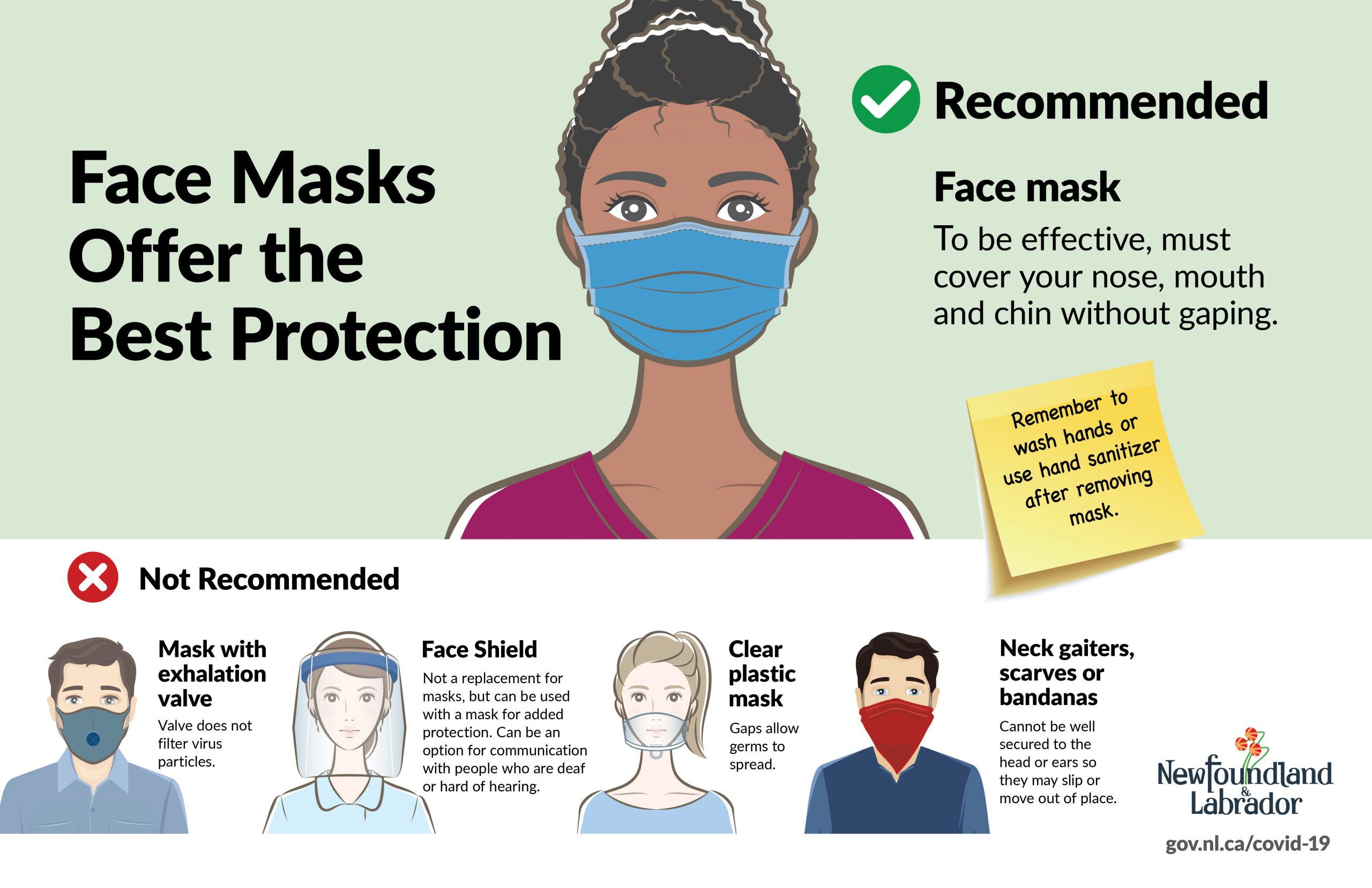
When choosing a mask or respirator choose the best quality and best fitting one that is available to you. You can use respirators, medical masks and non-medical masks in the community.
In general, while non-medical masks can help prevent the spread of COVID-19 and other respiratory illnesses, respirators and medical masks provide better protection. Non-medical masks can be effective depending on their construction, fit and proper use. Some can be similarly effective to medical masks if they:
- fit properly
- have an effective middle layer
- have multiple layers, including at least 2 layers of breathable tightly woven fabric.
Do not use masks with exhalation valves. There masks do not protect others from COVID-19 or limit the spread of the virus.
No matter which type of respirator or mask you choose, it needs to fit properly to be effective in protecting you. Using respirators in community settings does not require formal fit testing.
For more information on types of masks and respirators please visit COVID-19 mask use: Types of masks and respirators – Canada.ca
Proper Use of a Mask
The following website demonstrates how to wear a non-medical mask:
COVID-19 mask use: How to make your mask fit properly – Canada.ca
Employer Recommendations
Wearing a mask that covers the nose and mouth is not mandatory, but recommended for people 5 years or older, with some exceptions (see below).
Health care facilities
Newfoundland and Labrador (NL) Health Services advises the public of updated masking recommendations for health-care facilities, effective October 29, 2024. Updated masking requirements in clinical areas apply to visitors/support persons, clients, patients (outpatient clinics and emergency departments) and health-care workers. NL Health Services will continue to monitor epidemiology, hospitalizations and outbreaks and masking guidelines will be re-evaluated March 31, 2025.
- Visitors/support persons, clients and patients (outpatient clinics and emergency departments) are required to wear a well-fitted medical mask in all clinical areas, including in waiting areas for health-care services/appointments, clinical care/treatment areas and while visiting patients and long-term care residents. These requirements do not apply to patients admitted to hospital or long-term care residents.
- Individuals seeking or receiving health-care services who are symptomatic (i.e. experiencing any one or more symptoms of COVID-19 or respiratory symptoms) or have a rash are reminded that they are required to wear a mask upon entry and at all times while inside a health-care facility. Visitors/support persons who are feeling unwell or sick should not visit patients/residents or accompany others to appointments.
- Individuals can wear their own medical mask or a mask provided at the health-care facility. Cloth masks and masks with exhalation valves are not permitted.
Workplaces
- Some employers may require masks for their staff and visitors. Make sure to check with your employer and service providers to confirm whether you are required to wear a mask.
- Requirements under the Occupational Health and Safety Act and Regulations, as well as any workplace specific health and safety plans, will continue to apply to workers.