

2004
Natural Resources
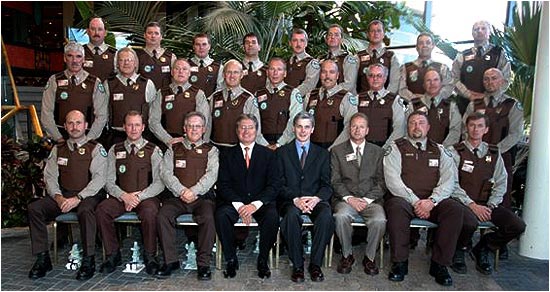
Sheldon Anstey, Winston Anstey, Colin Cheater, Brent Cole, Ignatius Dobbin, Bill Duffett, Thomas Gillingham, Kirk Holden, David Hunt, Howard Lavers, Derek LeBoubon, Jim Maloney, Norman Muise, Gary O’Brien, Roy Payne, Baine Pilgrim, Chuck Porter, John Pretty, Craig Randell, Wilson Russell, Alfred Ryan, Jon Sharron, Shawn Shears, Tony St. George, Hayward Taylor, Randy Trask, Perry Vey, Roger Ward, Barry White, Hayward White, Hollis Yetman.
In July of 2004, as a response to the significant impact poaching was having on declining Atlantic salmon stocks, the premier established the Inland Fisheries Enforcement Team. The team was to target individuals and groups having the most serious impact on salmon stocks within the province. Their efforts resulted in the protection of this vulnerable resource within a remarkably short period of time
In short order, the team had to plan, implement and oversee the management of the program. Within two weeks of being announced, the team was established and actively involved in enforcement, infiltrating a major poaching ring on the West Coast that had been operating for several years. The identification of several other poaching operations soon followed, and measures were taken to address these as well.
A testament to the outstanding achievements of this group is the significant amount of positive media coverage generated across the country. Many of the media stories applauded the province’s decision to take such action to protect our Atlantic salmon stocks.
This group and its dedication to protecting this resource have been heralded by the Salmonid Council Enforcement Committee as the “single biggest event in enforcement in 20 years in this province.” The officers laid 180 charges throughout the duration of the program which resulted in numerous convictions, heavy fines and the forfeiture of fishing equipment and motor vehicles. The heightened awareness on poaching activities has assisted conservation officers in carrying out their enforcement duties and contributed to the quality of their working environment, while increasing their ability to provide an enhanced level of service to the citizens of Newfoundland and Labrador.
The fact the Inland Fisheries Enforcement Team were able to make such a difference is particularly impressive given their challenging working circumstances. The team’s ability to achieve such positive results is an indication of their skill, training and the professional manner in which they approach their jobs each day. They have set a standard by which future enforcement efforts should be conducted.