Government of Newfoundland and Labrador

Affordable Healthy Eating

Left Header Right Header

Welcome to Affordable Healthy Eating

Eating well can be affordable. There are ways to save money while making nutritious choices at the grocery store.

Use the following tips to save money and eat well:

Plan Ahead

  • Set a budget to determine how much money you can spend on groceries each week or month.
  • Use Canada’s food guide to plan meals and snacks. Include vegetables and fruits, whole grain foods and protein foods.
  • Check foods you have on hand. Make a list of only the foods you need to buy in order to prepare the meals and snacks in your plan.
  • Look for sales. Check out flyers, emails, websites, mobile apps and social media.
  • Check grocery store for member discount programs or bonus days (e.g., seniors discount day).


Shopping

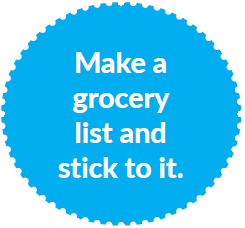
  • Stick to your grocery list.
  • Shop on a full stomach. If you shop when you are hungry, you may buy foods not on your grocery list.Make a grocery list and stick to it.
  • Use the nutrition facts table on food labels to help choose foods lower in sodium, sugars and saturated fat. For more information, see Canada’s food guide and How to use food labels to make healthier choices.
  • Buy store brands as they are often less expensive than brand names.
  • Be aware of food marketing that encourages the purchase of processed and ready-made foods as they are usually more expensive and less nutritious.
  • Compare shelf sticker prices per 100 g or 100 mL to find the best buys. If the bigger package of food is cheaper, it’s a good buy as long as you can use it up or freeze it before it spoils.

 

Left Footer Right Footer
Left Header Right Header

Cost Saving Tips

  • When ingredients like meat or chicken are on sale, buy extra and cook double batches of recipes to freeze for later use.
  • Buy frozen or canned vegetables and fruits which can be less expensive than fresh.
  • Pick berries or grow some of your own vegetables if possible. If you are not able to do this, locally grown foods may be available in your community.
  • Fish or hunt for food when you can. Fish and wild game are nutritious foods.
  • Try meatless meals using plant-based protein foods such as canned or dried beans, peas or lentils and peanut butter.
  • Use a reusable water bottle instead of buying bottled water.
  • Limit highly processed foods, ready-made dishes and drinks that are high in sodium, sugars and/or saturated fats such as cookies and other baked goods, chips, and soft drinks. They are low in nutrients and can add extra cost.
  • When available, use school breakfast and lunch programs.
  • Find out what programs are in your community to help you save money. These may include bulk buying clubs, community gardens, community freezers, or community kitchens.
  • For more cost saving tips, visit Canada’s food guide’s healthy eating on a budget.

Left Footer Right Footer
Left Header Right Header

Canada’s Food Guide

Plan meals and snacks using Canada’s Food Guide

Vegetables and fruits

• Fresh, frozen and canned vegetables and fruits are all healthy choices.
• Carrots, onions, turnips, cabbages and potatoes are good buys year-round.
• Large bags of frozen vegetables and fruits are great buys because you can use what you need and keep the rest in the freezer.
• Try to avoid vegetables prepacked in sauces as they may be higher in sodium, sugars and saturated fat.
• Pick your own berries and freeze some for the winter.
• To help avoid spoilage and waste, try to buy fruits like bananas at different stages of ripeness: some that are ready to eat and some that will ripen in a few days.


Whole grain foods

• Buy whole grains such as brown rice and rolled oats in large packages or in bulk.
• Try adding brown rice or barley to homemade soups.
• Start your day with a bowl of oatmeal, unsweetened whole grain cereal or whole grain toast.
• Avoid instant cereals, seasoned rice and pasta mixes, which cost more and are often high in sodium.
• Buy whole grain breads, bagels, tortillas and pitas on sale and store in the freezer.
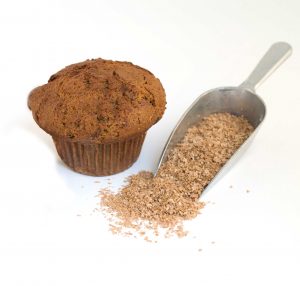
• Make your own homemade muffins with whole wheat flour and rolled oats.


Protein foods

• Plant-based proteins, including beans, dried peas and lentils, can cost less. Plan meals with these plant-based protein foods more
often, such as baked beans and pea soup.
• Buy family-sized packs of meat, poultry or fish and, if needed, separate into meal sized portions and freeze.
• Try canned tuna, salmon or sardines in sandwiches, casseroles or salads.
• Buy dried beans, peas and lentils more often than canned varieties since they cost less. Follow the package directions for cooking.
• Milk made from skim milk powder is cheaper than fresh milk. You can drink it, pour it over whole grain cereal, or use it for
baking and cooking. For best taste, chill it before drinking.
• Buy yogurt in larger containers, since they can be cheaper per serving than individual cups.
• Buy cheese in blocks and cut or grate it yourself. Blocks of unopened cheese can be frozen for 6-8 weeks.
• Eggs and peanut butter are also affordable and healthy protein foods.

Left Footer Right Footer
Left Header Right Header

Overview

Plan meals and snacks using Canada’s food guide

  • Have plenty of vegetables & fruit.
  • Choose whole grain foods.
  • Eat protein foods.

For more information on eating healthy visit Canada’s food guide.

Left Footer Right Footer
Left Header Right Header

Vegetables and Fruit

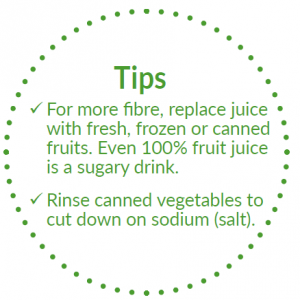
Tips: For more fibre, replace juice with fresh, frozen or canned fruits. Even 100% fruit juice is a sugary drink. Rinse canned vegetables to cut down on sodium (salt).

  • Fresh, frozen and canned vegetables and fruits are all healthy choices.
  • Carrots, onions, turnips, cabbages and potatoes are good buys year-round.
  • Large bags of frozen vegetables and fruits are great because you can use what you need and keep the rest in the freezer.
  • Try to avoid vegetables prepacked in sauces as they may be higher in sodium, sugars and saturated fat.
  • Pick your own berries and freeze some for the winter.
  • To help avoid spoilage and waste, try to buy fruits like bananas at different stages of ripeness: some that are ready to eat and some that will ripen in a few days.

For more information on how to eat more of these foods, visit the Vegetables and Fruit website or Canada’s Food Guide.

Left Footer Right Footer
Left Header Right Header

Whole Grain Foods

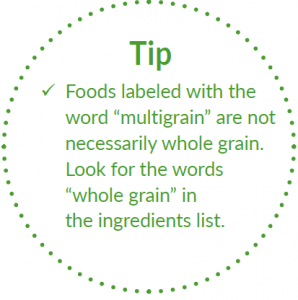
Tip: Foods labelled with word multigrain are not necessarily whole grain. Look for the words whole grain in the ingredients list.

  • Buy whole grains such as brown rice and rolled oats in large packages or in bulk.
  • Try adding brown rice or barley to homemade soups.
  • Start your day with a bowl of oatmeal, unsweetened whole grain cereal or whole grain toast.
  • Avoid instant cereals, seasoned rice and pasta mixes, which cost more and are often high in sodium.
  • Buy whole grain breads, bagels, tortillas and pitas on sale and store in the freezer.
  • Make your own homemade muffins with whole wheat flour and rolled oats.


For more information on Whole Grain Foods, visit Canada’s Food Guide.

Left Footer Right Footer
Left Header Right Header

Protein Foods

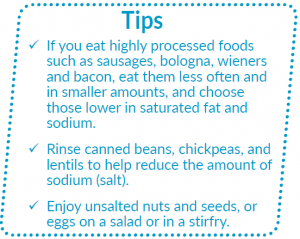
Tips: If you eat highly processed foods such as sausages, bologna, wieners and bacon, eat them less often and in smaller amounts, and choose those lower in saturated fat and sodium. Rinse canned beans, chickpeas, and lentils to help reduce the amount of sodium (salt). Enjoy unsalted nuts and seeds, or eggs on a salad or in a stir fry.

  • Plant-based proteins, including beans, dried peas and lentils, can cost less. Plan meals with these plant-based protein foods more often, such as baked beans and pea soup.
  • Buy family-sized packs of meat, poultry or fish and, if needed, separate into meal sized portions and freeze.
  • Try canned tuna, salmon or sardines in sandwiches, casseroles or salads.
  • Buy dried beans, peas and lentils more often than canned varieties since they cost less. Follow the package directions for cooking.
  • Milk made from skim milk powder is cheaper than fresh milk. You can drink it, pour it over whole grain cereal, or use it for baking and cooking. For best taste, chill it before drinking.
  • Buy yogurt in larger containers, since they can be cheaper per serving than individual cups.
  • Buy cheese in blocks and cut or grate it yourself. Blocks of unopened cheese can be frozen for 6-8 weeks.
  • Eggs and peanut butter are also affordable and nutritious protein foods.

For more information Protein Foods, visit Canada’s Food Guide.

Left Footer Right Footer
Left Header Right Header

Meal Ideas

When planning your menu for the week, consider some of these meal ideas:

  • Peanut butter sandwich made with whole grain bread, a banana and glass of white milk.
  • Veggie omelette with whole grain toast and grapes.
  • Baked chicken leg (remove skin), brown rice, mixed frozen vegetables, with canned fruit and a glass of water.
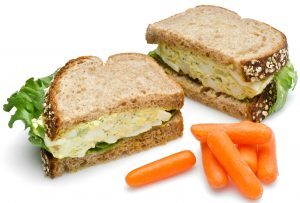
  • Egg salad sandwich on whole grain bread with carrot sticks, yogurt and an apple.
  • Black beans, corn, tomatoes and onions in a whole grain wrap with salsa and cheese.
  • Lentil and vegetable soup, whole grain roll and a glass of white milk.
  • Homemade oatmeal with fresh or frozen berries, yogurt and unsalted nuts.
  • Tuna melt using a whole grain english muffin with canned tuna, cheese and tomato slices with canned fruit.
  • Whole grain pasta with tomato sauce and frozen veggies. Have it with a glass of white milk and some fruit.
  •  Vegetarian chili with a whole grain roll and glass of white milk.
  •  Mixed greens and vegetable salad topped with canned chick peas or black beans (rinse first) and a glass of milk.
Left Footer Right Footer
Left Header Right Header

Snack Ideas

Snacks are a great way to include more nutritious foods in your day. To save money, prepare and pack your own snacks rather than purchasing them on the run. Here are some snack ideas:

  • Apple slices and peanut butter.
  • Yogurt and canned fruit.
  • Carrot and turnip sticks with hummus for dip.
  • Fruit salad made with fresh, frozen or canned fruits.
  • Whole grain cereal with white milk or unsweetened fortified soy beverage and fresh or frozen berries.
  • Unsalted nuts and a banana.
  • Homemade whole wheat muffin with hard cheese and an orange.

Tip: Keep cut-up veggies and hard boiled eggs on hand in the fridge for quick snacks.

Left Footer Right Footer
Left Header Right Header

Cooking….back to the basics

Try these recipes for some easy make-at-home meals that are less expensive than buying readymade items. Some of them can even be made with leftover vegetables, chicken and meat.

  • Omelette
  • Stirfry
  • Vegetarian Chili
  • Whole Roasted Chicken

For more healthy recipe ideas, visit www.unlockfood.ca


Left Footer Right Footer
Left Header Right Header

Overview

Cooking….Back to the Basics

Try these recipes for some easy make-at-home meals that are less expensive than buying readymade items. Some of them can even be made with leftover vegetables, chicken and meat.

  • Omelette
  • Stirfry
  • Vegetarian chili
  • Whole roasted chicken

For more recipe ideas, visit Healthy Eating for Healthy Aging

Left Footer Right Footer
Left Header Right Header

Omelette

  1. Break 2 raw eggs into a bowl and add 2 tablespoons of lower fat milk. Beat with a fork. Add pepper as desired.
  2. Heat 1 tablespoon of oil in a frying pan over medium-high temperature.
  3. Pour in egg mixture.
  4. During cooking, lift edges and tip pan so uncooked liquid egg flows underneath. Do not stir. Cook until omelette is set.
  5. Sprinkle half of omelette with a few spoonfuls of leftover cooked vegetables, and grated cheese. Once the cheese melts, folds over half of the omelette and serve with whole grain toast.
Left Footer Right Footer
Left Header Right Header

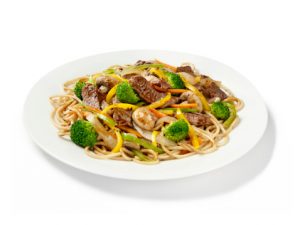
Stirfry

  1. Cut cooked lean meat or skinless chicken into bite-sized pieces (approx. 2 cups). Prepare about twice as much bite-sized chopped vegetables (carrots, celery. red or green peppers, broccoli, onion, mushroom, etc.,) or use frozen mixed vegetables.                           
  2. In a large frying pan, heat 1-2 tablespoons of oil. Add vegetables  and cook until tender-crisp, stirring constantly. Get to know the  different cooking times of vegetables since some take longer than others to cook. For example, add onions and  cook for about 2 minutes, then add broccoli for about 4 more minutes, then add red or green pepper and cook for about 2 more minutes. 
  3. Add 1/2 cup of water or  reduced sodium broth to the vegetables. Stir in a mixture of 2 tablespoons cornstarch and 1 1/2 tablespoons lower sodium soy sauce. Stir until it thickens.
  4. Add cooked meat or chicken. Heat thoroughly.
  5. Serve on brown rice or whole grain pasta.


Left Footer Right Footer
Left Header Right Header

Vegetarian Chili

  1. Peel and chop 2 carrots and set aside.
  2. In a large saucepan add 2 tablespoons vegetable oil and fry 1 chopped onion, and 4 cloves of fresh crushed garlic.
  3. Add spices (2 tablespoons chili powder, tablespoon cumin) to cooked onions and garlic.
  4. Rinse 1 can (796 mL) kidney beans and 1 can (540 mL) black beans under cold water, drain and set aside.
  5. Add 1 can (540 mL) lower sodium diced tomatoes, 1 can (796 mL) lower sodium whole tomatoes, the chopped carrots and the rinsed beans to the saucepan.
  6. Bring chili to a boil, cover pot, reduce heat to a simmer/slight boil and cook for about 1 hour. Stir occasionally.
  7. Serve over brown rice or with a whole grain roll.
Left Footer Right Footer
Left Header Right Header

Whole Roasted Chicken

  1. Remove chicken from its plastic wrap and remove the giblets and neck from inside the chicken.
  2. Use a sharp knife to trim any large amounts of fat and loose skin.
  3. Sprinkle with pepper and spices/herbs (e.g., savoury) as desired on the outside as well as inside. Try adding onion, garlic and lemon to the roasting pan for more flavour.
  4. Place the chicken in a roasting/baking pan with its breast-side up. Cover with lid or  aluminum foil to keep moisture in.
  5. Bake at 325°F for about 45 minutes per kg (20 minutes per pound). Using a meat thermometer, internal temperature should reach 185°F (85°C). Thermometer
    should be placed into the thickest part of the thigh, avoiding the bone. The chicken is done when the leg moves freely in the joint. For golden, crispy chicken, remove the cover for the last 5-10 minutes of cooking.
  6. Serve with vegetables and brown rice.


Left Footer Right Footer
Left Header Right Header

Food Safety in Your Home

The following are some simple food safety tips to reduce the risk of food poisoning in your home:

Clean

  • Wash your hands with soap and water for at least 20 seconds, especially before handling food or eating, and after handling raw meats, using the toilet, touching pets/animals and changing diapers.
  • Wash counters, utensils, cutting boards, and other surfaces after they come into contact with raw meat.
  • Wash all produce thoroughly with tap water before cooking or eating.

Chill

  • Chill all leftovers within two hours or less, to keep them out of room temperature. Click here for more information on storing leftovers.
  • Refrigerate all perishable foods at 4°C (40°F) or less, to prevent the growth of bacteria.
  • Thaw frozen foods in a refrigerator, cold water, or a microwave oven, not at room temperature. If you use the microwave to thaw, cook the food immediately.

Cook

  • Cook food thoroughly to kill harmful bacteria that may be present in or on the food. This is very important for poultry and ground beef.
  • Keep all hot foods at 60°C (140°F) or more, to prevent the growth of bacteria.
  • Use a kitchen thermometer to check cooking and storage temperatures. Click here for information on cooking temperatures.

Separate

  • Use separate cutting boards for raw meats and raw vegetables and fruits.
  • Store packaged raw meats on a plate and below ready-to-eat foods, on lower refrigerator shelves, to prevent contamination caused by dripping.

For more information, visit Canada.ca/foodsafety

Left Footer Right Footer
Left Header Right Header

Sample Shopping List

Vegetables and fruits

Bananas
Apples
Oranges
Onions
Carrots
Turnip
Potatoes
Cabbage
Tomato sauce
Frozen berries
Frozen broccoli
Canned peaches

Other Foods

Soft margarine
Vegetable oil
Oil-based salad dressings

Whole grain foods

Whole grain bread
Whole grain cereals
Brown rice
Whole grain pasta
Whole grain crackers
Rolled oats
Whole grain barley
Popcorn kernels
Whole wheat flour


Protein foods

Canned beans
Dried peas and lentils
Unsalted nuts and seeds
Peanut butter
Lean ground beef
Chicken thighs
Canned fish
Eggs
Milk
Yogurt
Cheese


Left Footer Right Footer
Left Header Right Header

More Resources on Eating Well

For more information visit:

  • Canada’s food guide
  • Vegetables and Fruit website
  • Healthy Eating for Healthy Aging
  • Food First NL
  • Dial-a-Dietitian
  • Eat Great and Participate
Left Footer Right Footer