Government of Newfoundland and Labrador

Healthy Lunch and Snack Ideas

Left Header Right Header

Welcome to Healthy Lunch and Snack Ideas

Having a variety of nutritious foods at meals and snacks is important for people of all ages, and this includes in packed lunches. For children, studies show that when they are well-nourished they can concentrate longer and perform better at school. Include nutritious foods and drinks in lunches to help children be ready to learn.

Tips for packing a healthy and safe lunch:

  • Plan ahead for lunches for the week. Use these ideas to make a grocery list;
  • Get children involved in preparing foods and packing their lunches;
  • Use leftovers for lunches to save time;
  • Use a thermos to help keep hot foods hot. Warm the thermos with boiling water before filling it with hot food;
  • Use an insulated lunch bag and a freezer pack to keep cold foods cold;
  • Wash fresh vegetables and fruits in advance;
  • Not all food that comes home in the lunch bag can be reused. Leftover sandwiches, hot foods, milk, yogurt and cheese are not safe to eat another day so don’t repack those foods. Also do not reuse wrappings;
  • Wash reusable beverage and food containers with soap and hot water; and,
  • Wash your hands before preparing food or eating and teach children to do this as well.

If you are preparing lunches for children under the age of four, some foods need to be modified to reduce the risk of choking. For more information click here.
Allergy Alert!

Some healthy foods and drinks are not permitted at workplaces, schools or in child care due to allergy awareness. Check in on these policies and avoid packing those foods for lunch and snacks.

.

Left Footer Right Footer
Left Header Right Header

Canada’s Food Guide

For a well-balanced lunch, include foods from all groupings of the Canada’s food guide.

Vegetables and fruits

Vegetables and fruits are important for growth and development. They provide a variety of vitamins, minerals and fibre, and contribute to overall well-being. To help children get enough vegetables and fruits, include them with every meal and snack.

Whole grain foods

Make sure you include whole grain foods, which are key to getting enough fibre and vitamins. You can use whole grain breads, rolls or wraps for sandwiches and whole grain crackers or cereal for grab-and-go choices.

Protein foods

Choose plant-based protein foods like hummus or beans, which are healthy, full of fibre and can be more affordable. Hard-boiled eggs, cheese and left over lean meat, chicken or turkey are also great options for packed lunches.

Make water your drink of choice

Make water the drink of choice and send it to school in a reusable bottle. Other healthy drink options include white milk or unsweetened fortified plant-based beverages such as soy or almond beverage.

Limit sugary drinks such as soft drinks, fruit-flavored drinks, 100% fruit juice, flavoured waters with added sugars, vitamin waters, sport and energy drinks, hot chocolate, iced tea and other sweetened hot or cold beverages. Children also do not need food or drinks with artificial sweeteners.

Left Footer Right Footer
Left Header Right Header

Overview

Plan lunches and snacks using Canada’s food guide

  • Have plenty of vegetables & fruit.
  • Choose whole grain foods.
  • Eat protein foods.
  • Chose water to drink.

For more information visit Canada’s food guide.

Left Footer Right Footer
Left Header Right Header

Vegetables and Fruits

Vegetables and fruits are important for growth and development. They provide a variety of vitamins, minerals and fibre, and contribute to overall well-being.

To help get enough vegetables and fruits, include them with every meal and snack.

Fresh frozen and canned vegetables and fruits are all healthy choices.

For more information on how to eat more of these foods, visit the Vegetables and Fruit website or Canada’s Food Guide.


Left Footer Right Footer
Left Header Right Header

Whole Grain Foods

Try to include whole grain foods at lunch. These foods are key to getting enough fibre and vitamins. You can use whole grain breads, rolls or wraps for sandwiches and whole grain crackers or cereal for grab-and-go choices.

For more information on Whole Grain Foods, see Canada’s Food Guide.

Left Footer Right Footer
Left Header Right Header

Protein Foods

Pack protein foods! Try those that are plant-based  like hummus or beans, which are healthy, full of fibre and can be more affordable. Hard-boiled eggs, cheese and left over lean meat, chicken or turkey are also great options for packed lunches.

For more information on protein foods, visit Canada’s Food Guide.

Left Footer Right Footer
Left Header Right Header

Healthy Lunch Ideas

  • Whole grain pita pocket filled with hummus, cucumber and peppers or other vegetables, along with kefir and frozen fruit.
  • Tuna wrap with a banana and milk.
  • Chili sprinkled with cheese, whole grain bread, and an orange.
  • Tossed salad made with a variety of vegetables and topped with a hard boiled egg, canned black beans or chickpeas and shredded cheese, with canned fruit and a small wholegrain muffin.
  • Homemade soup made with wild game, turkey or chicken and vegetables, whole grain crackers, a yogurt and an apple.
  • Mini pizza (made with a whole grain English muffin, sauce, veggies such as tomatoes and peppers and topped with cheese) and
    canned peaches.
  • Lentil dahl with mint yogurt and naan.
  • Dumplings with vegetables, rice and fortified soy beverage.
  • Cabbage rolls with salad, a whole grain roll and milk.
  • Homemade lunch kit with leftover turkey or beef, cheese, whole grain crackers and raw vegetables.

If you are preparing lunches for children under the age of four, some foods need to be modified to reduce the risk of choking. For more information click here.

Left Footer Right Footer
Left Header Right Header

Make Your Own “Lunch Kits”

Children and youth often want packaged foods they see on TV, online, or in their friends’ lunches. Be aware of foods marketed to children and ongoing new products on the shelf. Store bought lunch kits can be high in sodium (salt), sugars and/or saturated fat and are usually low in fibre and other nutrients.

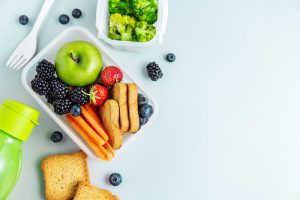
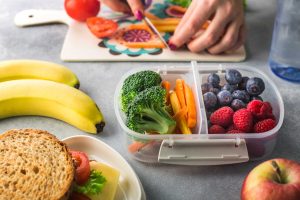
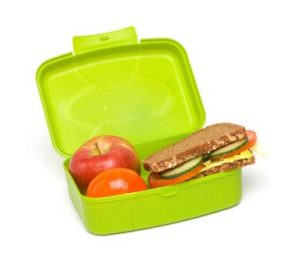
Try a reusable container with sections to make your own lunch kits and include finger foods. You can cut sandwiches, wraps or other foods into smaller pieces and add raw veggies or fruits and a yogurt to complete the kit.

If you are making lunch kits for children under the age of four, check out the information on food choking hazards.

Left Footer Right Footer
Left Header Right Header

Healthy Snack Ideas

Don’t forget snacks!

Snacks can be a great time to include nutritious foods and drinks. For children, to get the variety of nutrients they need for growth and development, they need snacks a few times a day.  Include at least one or two snacks in the lunch bag.

Healthy snack ideas

  • Apple slices and cheese.
  • Yogurt topped with a sauce made with local berries.
  • Carrot and turnip strips with hummus for dip.
  • Fruit salad made with fresh, frozen or canned fruits and whole grain crackers.
  • Whole grain cereal with milk topped with fresh or frozen berries.
  • Homemade whole-grain muffin, cheese and grapes.
  • Hard-boiled egg and an orange.
  • Pitsik with whole grain crackers.

If you are preparing snacks for children under the age of four, some foods need to be modified to reduce the risk of choking. For more information click here.

Left Footer Right Footer
Left Header Right Header

Limit Highly Processed Foods

Limit the amount of highly processed foods you offer for lunches and snacks. Examples of processed foods include:

  • Sugary drinks;
  • Chocolate and candies;
  • Ice cream and frozen desserts;
  • Fast foods like french fries and burgers;
  • Frozen packaged meals like pasta dishes and pizzas;
  • Bakery products like muffins, buns and cakes;
  • Processed meats like sausages, bologna, wieners, and deli meats;
  • Fruit leathers and other types of fruit snacks with added sugar; and,
  • Chips and cheesies.

These foods can be high in sodium (salt), sugars and/or saturated fat. If you choose to include these highly processed foods, do so less often and send small amounts. It is what you eat over time that matters most, not what you eat occasionally. Try to pack nutritious choices most often.

Left Footer Right Footer
Left Header Right Header

Label Reading

Use the Nutrition Facts Table on store-bought products to help you you make food and beverage choices. Using the percent daily value (% DV) can help you choose products that are lower in sodium, sugars and saturated fats.

  • A food with 5% DV or less of a nutrient is considered to have “a little” of that nutrient.
  • A food with 15% DV or more of any nutrient is considered to have “a lot” of that nutrient.

Check the list of ingredients as well; they are listed from the largest to the smallest amount (by weight) in the food. In the ingredient list you can look for particular ingredients who want to get more of, such as whole grains, or get less of, such as sugars. You can also look for allergens in the ingredient list.

For more information see, How to use food labels to make healthier choices, from Health Canada.

Left Footer Right Footer
Left Header Right Header

Did You Know?

Many of us do not take enough time to eat lunch. Being mindful and taking time to eat is important. Try to take a break to enjoy lunch. Canada’s food guide has great tips to be mindful when eating.

For school-aged children and youth, they may only have about 20 minutes to eat lunch at school. For younger children, save time by peeling fruit when possible and cutting up foods into smaller pieces, before packing in their lunch bags. It is also helpful to have them practice opening containers to ensure they can do this themselves at school.

Left Footer Right Footer
Left Header Right Header

More Resources on Healthy Eating

For more information on healthy eating visit:

  • Canada’s food guide
  • Affordable Healthy Eating
  • Vegetable and Fruit website
  • Food First NL
  • Dial-a-Dietitian
  • Eat Great and Participate
Left Footer Right Footer