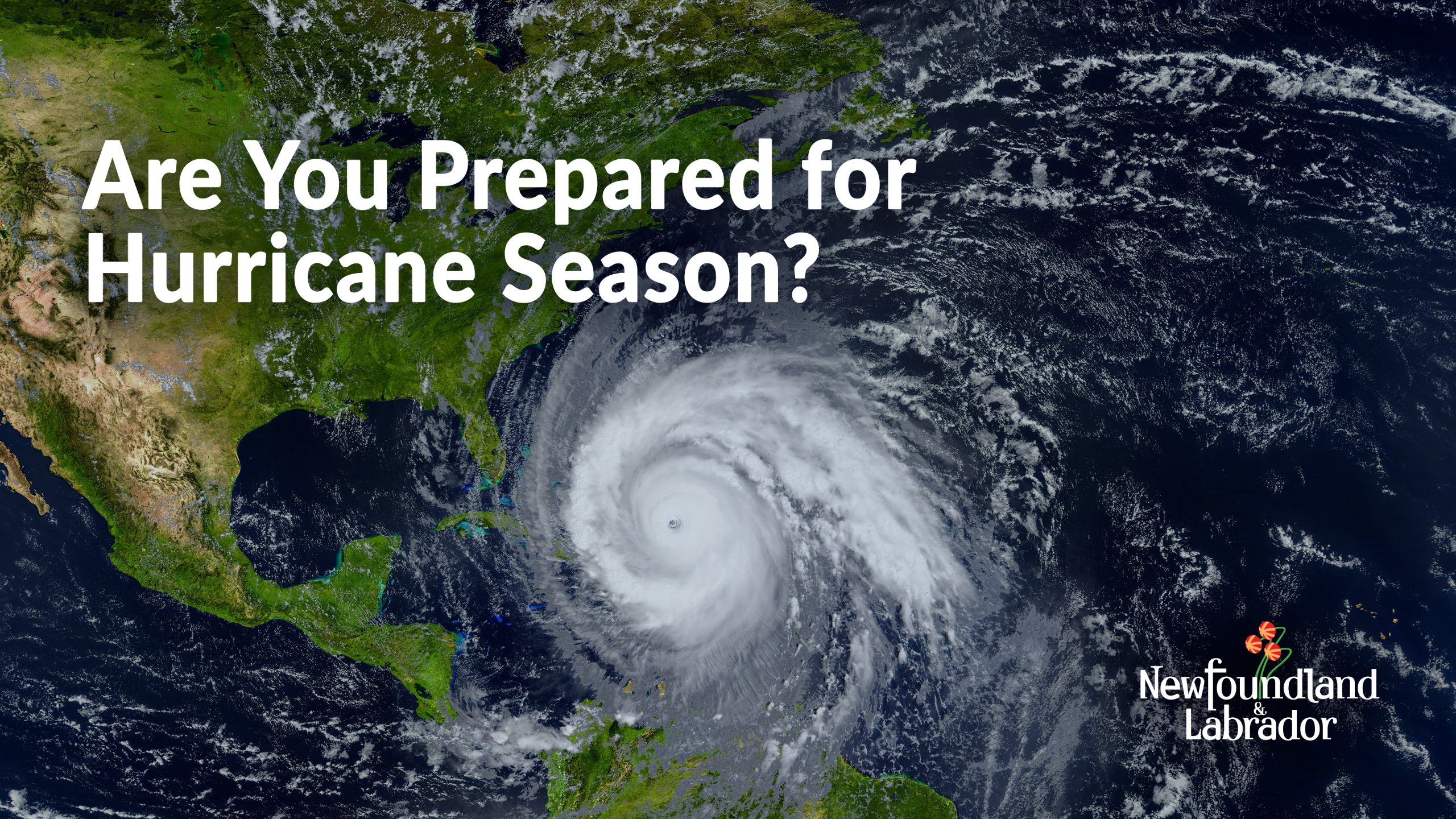
The Provincial Government is reminding residents and municipalities to be prepared for extreme weather events. The Atlantic hurricane season is from June through November when hurricanes usually form in the Atlantic Ocean.
When extreme weather is anticipated, residents are encouraged to monitor the forecast for the most up-to-date information. Regional forecast information is available from Environment Canada.
The public and local governments are reminded to:
- Ensure roads, ditches and drains are clear of debris;
- Ensure appropriate provisions are made for the delivery of services;
- Check NL 511 via the mobile app, visit nl511.ca or call 511 to check driving condition reports;
- Review and havhttp://nl511.ca/en/index.htmle ready emergency plans; and
- Take steps to ensure personal safety during the weather event.
Residents should ensure their own personal safety and know the risks most likely in your community. You should ensure your family has an emergency plan prepared in advance of anticipated adverse weather. Some tips are:
- Have a basic emergency kit and vehicle emergency kit prepared for at least 72 hours, with food, water, batteries, a portable radio, and prescription medications.
- You should store a three day supply of water, food, and clothing for each person, including supplies for family pets.
- Have copies of documents, such as insurance, driver’s license, passport, etc.
- You should ensure an amble amount of baby supplies, such as formula and diapers.
- Have a supply of medications, medical supplies and other essential personal items.
- Plan in advance to have your vehicles fueled and to have cash on hand.
- Secure loose items around your house and clear drains and basins.
- Trim branches and cut down dead trees.
- Be prepared to move inland and go to higher ground.
- Stay up-to-date by monitoring forecast information and local news.
Disasters and emergencies affect everyone: you, your family, your neighbours and community. People may experience barriers in emergency preparedness and emergency situations which may include accessing devices that run electrical power, elevators, accessible transportation and accessible communications.
Information on emergency preparedness for persons with disabilities and their families can be found on the Coalition of Persons with Disabilities NL website and on the federal website for an Emergency Preparedness Guide for People with Disabilities.
It is important to take care of yourself, your family and work together with your neighbours to help keep each other safe and protect lives and property. The first step in responding to a disaster as a community is getting to know the other members of your community beforehand. Engage members of your community to share information about emergency preparedness and how you can support each other. Be aware of neighbors who are elderly, people with disabilities, people with limited resources or persons who identify they need support for emergencies. This way, you know where to start when checking on the status of your neighbours following a disaster.
Visit Be Prepared for more information on what people should do to prepare for an adverse weather event, major emergency or disaster.
-30-
Media contact
Emily-Jane Gillingham
Justice and Public Safety
709-729-2634, 730-4607
emilygillingham@gov.nl.ca